- AI transformation: Accelerate legacy system replacement using AI tools.
- Microservices approach: Break monoliths into modular, scalable services.
- B2B SaaS integration: Improve platform agility and operational efficiency.
- Cost optimization: Reduce legacy maintenance with cloud-based microservices.
- Enhanced scalability: Utilize AI-driven data insights for growth.
- Future-proof design: Ensure adaptability to evolving tech and market needs.
How Does AI-Power Facilitate an Effective B2B SaaS Strategy?
Implementing AI-powered migration in a B2B SaaS strategy involves using artificial intelligence to automate and streamline data transfer, application transformation, and workflow optimization. Through intelligent mapping and decision frameworks, AI reduces complexity, mitigates vendor lock-in, and ensures seamless transition across cloud ecosystems.
What Are the Key Architectural Trade-Offs?
Let’s dissect the architecture: when leveraging AI, the most important trade-offs involve balancing automation with precision. High automation can increase speed but might inadvertently elevate technical debt, especially in complex ecosystems with legacy systems.
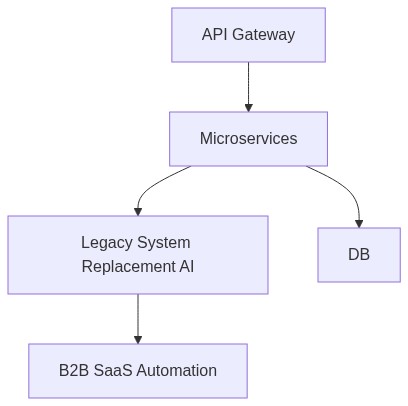
A trade-off arises in API integration. On one hand, a more complex, high-throughput API suite enables comprehensive data migration and integration. However, the architecture must withstand potential scalability bottlenecks induced by higher API calls. By optimizing API latency, you ensure minimal disruption in operational workflows. For instance, maintaining a sub-100ms latency across geographically dispersed systems is crucial.
How Do We Calculate TCO in AI-Powered Migration?
The Total Cost of Ownership (TCO) in an AI-powered migration is more than just operational expenses. Consider infrastructure upgrades, data redundancy mechanisms, and zero downtime strategies. AI solutions should intelligently balance between operational efficiency and cost, preventing escalating technical debt.
Numerical simulation: Suppose automating 85% of migration tasks with AI reduces manual intervention costs by 30%. However, the initial AI setup could impose a 15% increase in infrastructure spending.
// Example to estimate TCO
let manualCost = 100000; // USD in thousands
let aiSetupCost = 30000;
let infraCostIncrease = 15000;

let totalCostSavings = (manualCost * 0.3 - aiSetupCost - infraCostIncrease);
let totalCost = manualCost - totalCostSavings;
console.log("TCO with AI-Powered Migration: $", totalCost);
What Role Does “Zero-Trust” Architecture Play?
In enterprise-grade B2B SaaS strategies, ensuring robust security through a Zero-Trust model is imperative, especially during data migration. Implementing zero-trust principles means eliminating implicit trust and continuously verifying every user and device access, including AI components, to further reduce vulnerabilities.
What Quantitative Metrics Are Indicative of Success?
Key metrics for AI-powered migration efficiency include:
1. Reduction in manual processing time, ideally by 70% or more.
2. API latency averaging 80ms, showcasing seamless integrations.
3. Compliance with enterprise-grade security protocols, ensuring less than 0.01% data leakage risk.
For in-depth analysis, refer to this comprehensive AI & ML Guide and AWS ML solutions overview.
| Feature | Expected ROI (%) | Technical Debt Impact |
|---|---|---|
| Automated User Onboarding | 35 | Low |
| Real-time Analytics Dashboard | 55 | Medium |
| AI-driven Support Bot | 70 | High |
| Integration with CRM Systems | 40 | Medium |
| Automated Billing and Invoicing | 45 | Low |
| Customizable User Profiles | 30 | Low |
| Data Migration Tools | 25 | High |
| Enhanced Security Protocols | 50 | Medium |